
CO-SFSC at the ESA Conference in Warsaw
Two contributions from the CO-SFSC project were presented at the 17th Conference of the European Sociological Association (ESA) in Warsaw in August 2026. Both focused on the cultural and knowledge-based dimensions of sustainability transformation in food systems — from implicit values and worldviews to traditional ecological and agricultural knowledge.
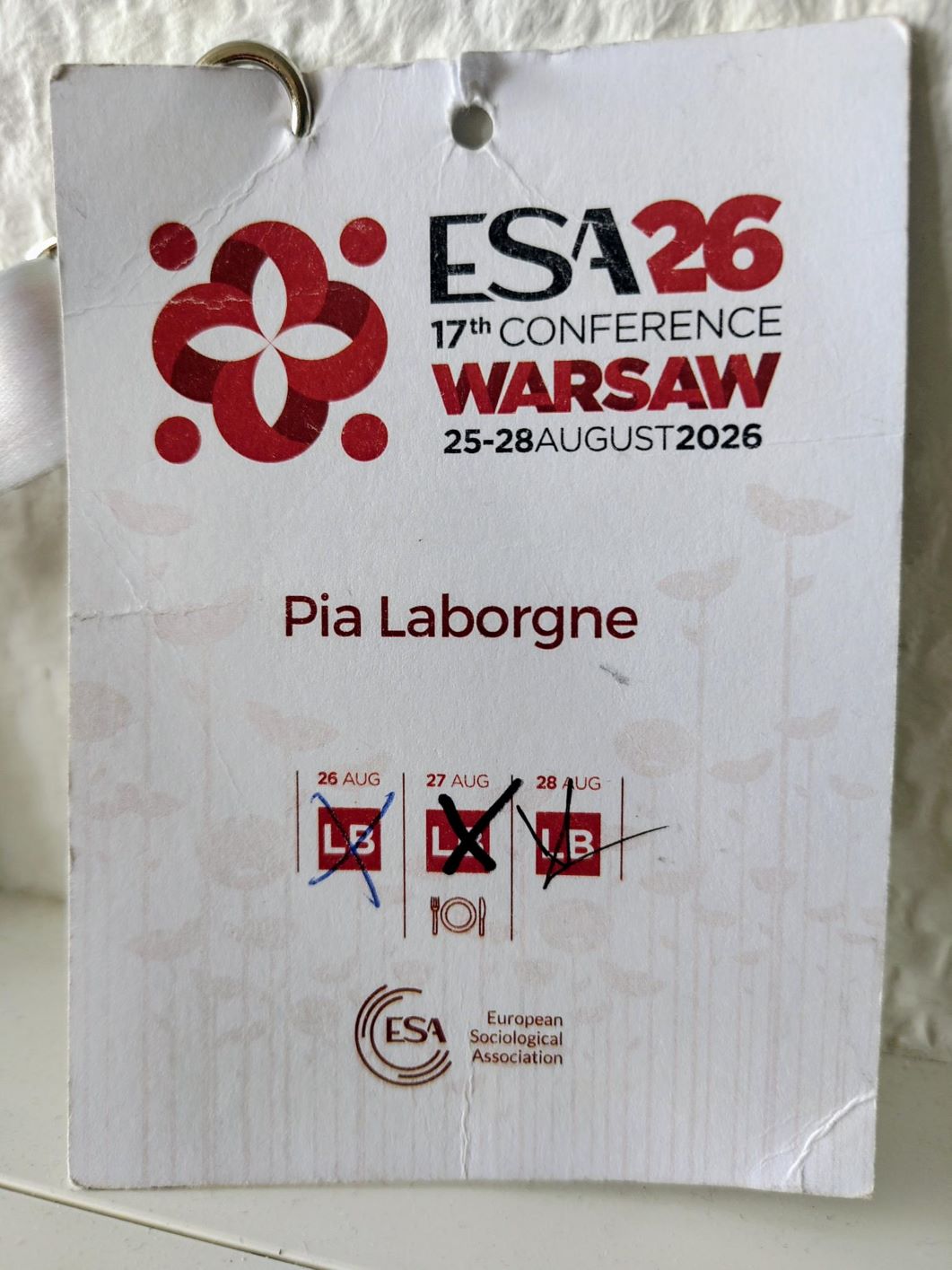
The ESA 2026 conference took place under the theme "Strengthening Democracies: Social Action, Solidarity, and Sustainable Futures" from 25 to 28 August at the Warsaw University of Life Sciences (SGGW). For the Belmont Forum project "Co-Creating Sustainable Transformations of Food Supply Chains" (CO-SFSC, 2023–2026), researchers from the consortium presented two talks showcasing key interim findings from the transdisciplinary research carried out in the project's hubs.
Presentation 1: A Cultural Theory of Sustainability Transformation
Eva Wendeberg, Pia Laborgne, Oliver Parodi and Wanda Wieczorek (all Karlsruhe Institute of Technology, KIT), together with Çiğdem Adem (Middle East Technical University, Turkey), presented their work on the "culture gap" in sustainability research under the title "Application of a Cultural Theory of Sustainability Transformation in Transdisciplinary Research on Sustainable Food Systems."
The starting point is a challenge familiar to many sustainability projects: despite extensive knowledge about technologies, infrastructures, policies and economics, a persistent gap remains between knowledge and action. According to the cultural theory of sustainability transformation (Parodi, 2024), barriers to sustainability operate across multiple interrelated levels — from infrastructure to cultural and existential dimensions. The deeper, less tangible levels — values, worldviews, aesthetic perceptions and human–world relations — exert a strong influence on the more visible ones above them, opening up "deep leverage points" for change.
Within CO-SFSC, this approach is applied across six transdisciplinary research hubs in Taiwan, Thailand, Turkey, Sweden and Germany (two hubs), operationalising sustainability as a deep cultural phenomenon in the field of sustainable local food systems. The presentation shared empirical results from exploratory qualitative interviews with research partners in each hub, exploring implicit norms and values as well as relationships — including between humans and nature, such as the soil. The aim is a deeper understanding of sustainability that makes transformation efforts more stable in the long term.
Presentation 2: Traditional Knowledge in Food Systems
The second contribution, "The Role of Traditional Knowledge in Enhancing the Sustainability of Food Supply Chains: Case Studies from Turkey, Germany and Taiwan," brought together Çiğdem Adem and Zühre Aksoy (Middle East Technical University and Boğaziçi University, Turkey), Pia Laborgne and Eva Wendeberg (KIT), and Yu-An Chou and Ying-Chen Lin (National Taipei University). It looked at the role of traditional knowledge across three CO-SFSC hubs: Turkey, Germany and Taiwan.
The talk began by defining and distinguishing between traditional ecological knowledge and traditional agricultural knowledge, building on a research tradition dating back to the early 1990s that examines how such knowledge is woven together with scientific knowledge to enhance sustainable consumption and production patterns. The study comparatively identified the traditional knowledge present in each hub and mapped how cooperatives and farmers' associations engage with it — including place-specific growing and preparation practices, internal and external learning processes, ecological sustainability, and organisational issues such as tenure arrangements and resource allocation within the community. It further examined how farmers' engagement in agricultural production is changing and the role cooperatives or farmers' associations play in bridging diverse knowledge systems.
Outlook
Together, both presentations showed how CO-SFSC systematically explores the cultural and knowledge-based foundations of sustainable food systems, complementing technical, economic and policy-oriented approaches. Feedback from Warsaw is now feeding into the ongoing work of the project's hubs.
For more information about the conference: Click here