
Webinar on Deep Sustainability
Sustainability is not only about technology, economics, or policy — it is also deeply connected to culture, emotions, and everyday experiences. This key message emerged during the international webinar “Sustainability as a Deep Cultural Phenomenon”, which was organised as part of the CO-SFSC project, presented by Oliver Parodi, Eva Wendeberg and Pia Laborgne, moderated by Ashley Colby and supplemented by the perspective of interviewee Aylin Topal. The event brought together researchers and participants to discuss how cultural narratives and personal relationships with food influence sustainable transformation.
The webinar “Sustainability as a Deep Cultural Phenomenon – An Exploration of Relations to Sustainable Food Supply”, held on May 11, 2026, explored sustainability from a cultural and human-centered perspective. Organized as part of the CO-SFSC project, the session examined how values, emotions, and social practices shape people’s relationships with food and sustainability.
Drawing on narrative interviews, the presenters shared insights into how individuals from different cultural contexts perceive sustainable food systems. Oliver Parodi opened the session with an introduction to the topic, followed by Eva Wendeberg’s presentation of findings from an explorative interview study. Aylin Topal then shared her experiences and observations from the interview process. The research demonstrated that sustainability practices are strongly influenced by personal experiences, emotional connections, and cultural meanings attached to food and consumption.
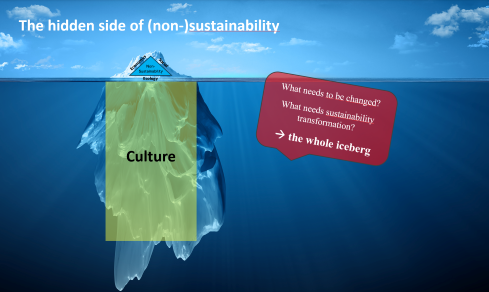
A central focus of the webinar was the idea that sustainability must be understood as part of interconnected socio-ecological systems rather than isolated technical challenges. The discussion emphasized that sustainable transformation requires looking beyond individual actions and considering the broader cultural and systemic structures that shape behaviour. Similar perspectives highlighted during the session included the importance of understanding relationships, feedback loops, and the interconnectedness of systems in achieving sustainability.
The presenters also addressed the concept of “deep leverage points” for transformation, referring to underlying societal values and worldviews that can significantly influence sustainable behaviour. Participants discussed how changing cultural narratives and strengthening social connections may become essential drivers for future food system transformation.
Another important theme was the need to move from fragmented approaches toward more holistic understandings of sustainability. Discussions highlighted that sustainable systems depend not only on efficient individual components, but also on the quality of relationships and interactions within the whole system.
The webinar concluded with an interactive discussion session, where participants reflected on methodological approaches, challenges in sustainability research, and opportunities for intercultural learning and collaboration.
A recording of the webinar is available online and offers further insight into the presented research and discussion. Here is the link to the video.